Social Demos, episode 6
Your AI is only as good as its evaluators.
80% of enterprise AI projects fail before production. The model is rarely the problem. The evaluation data underneath it is.
All evaluation outputs, annotation samples, quality scores, pipeline metrics and dataset estimates shown are synthetic simulations. No client data is shown. Illustration purposes only.
80%+
AI pilots fail in production
60%
abandoned before production
$2.32B
eval data market 2026
35+
languages evaluated by Corpshore AI
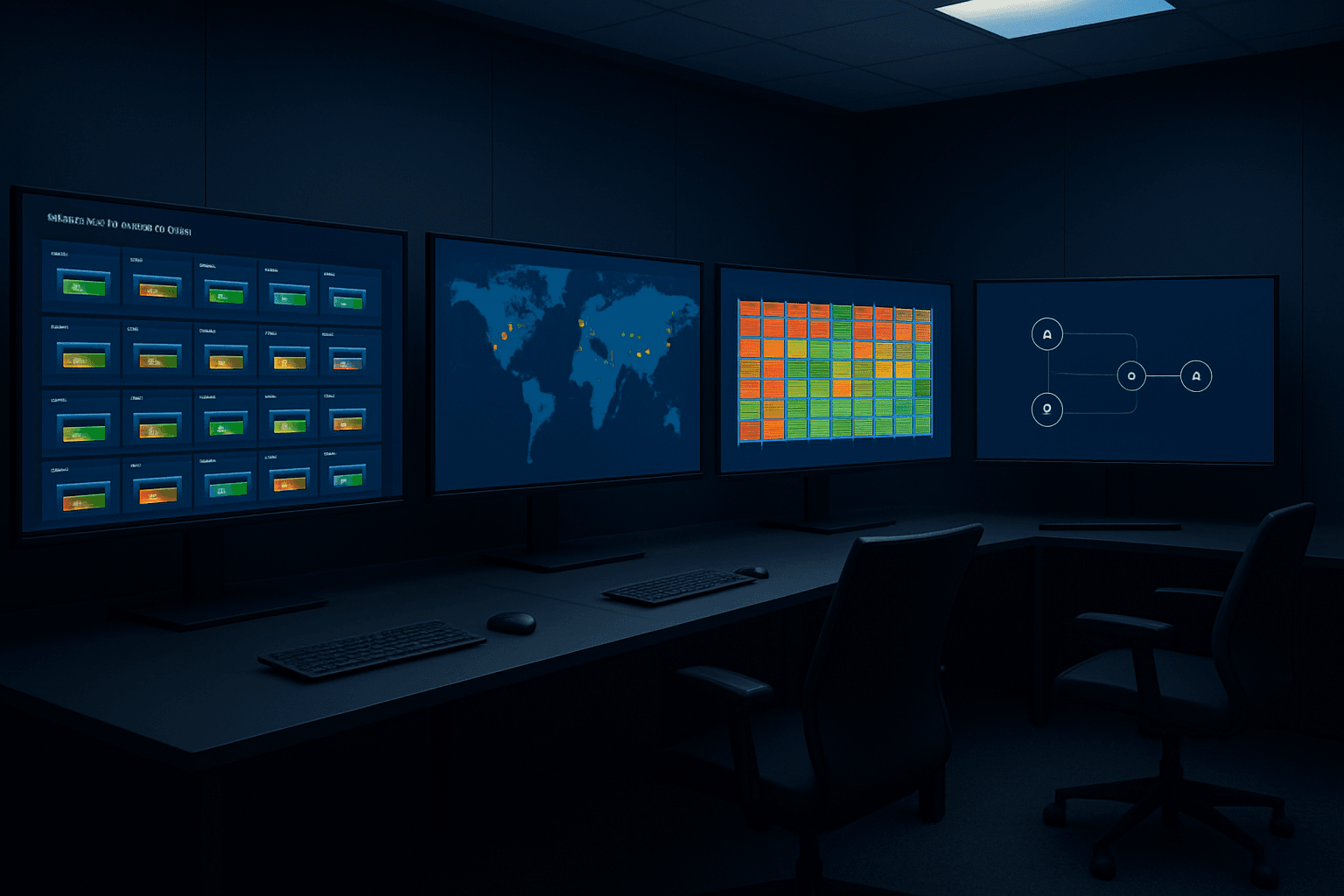
Stage 01
The five failure modes that account for 100% of enterprise AI failures
Hallucination, bias, safety, instruction following and performance drift. Every enterprise AI failure traces back to one of these five categories. Click any card to see what goes wrong, why standard benchmarks miss it and how Corpshore AI and Jwuma address it.
Stage 02
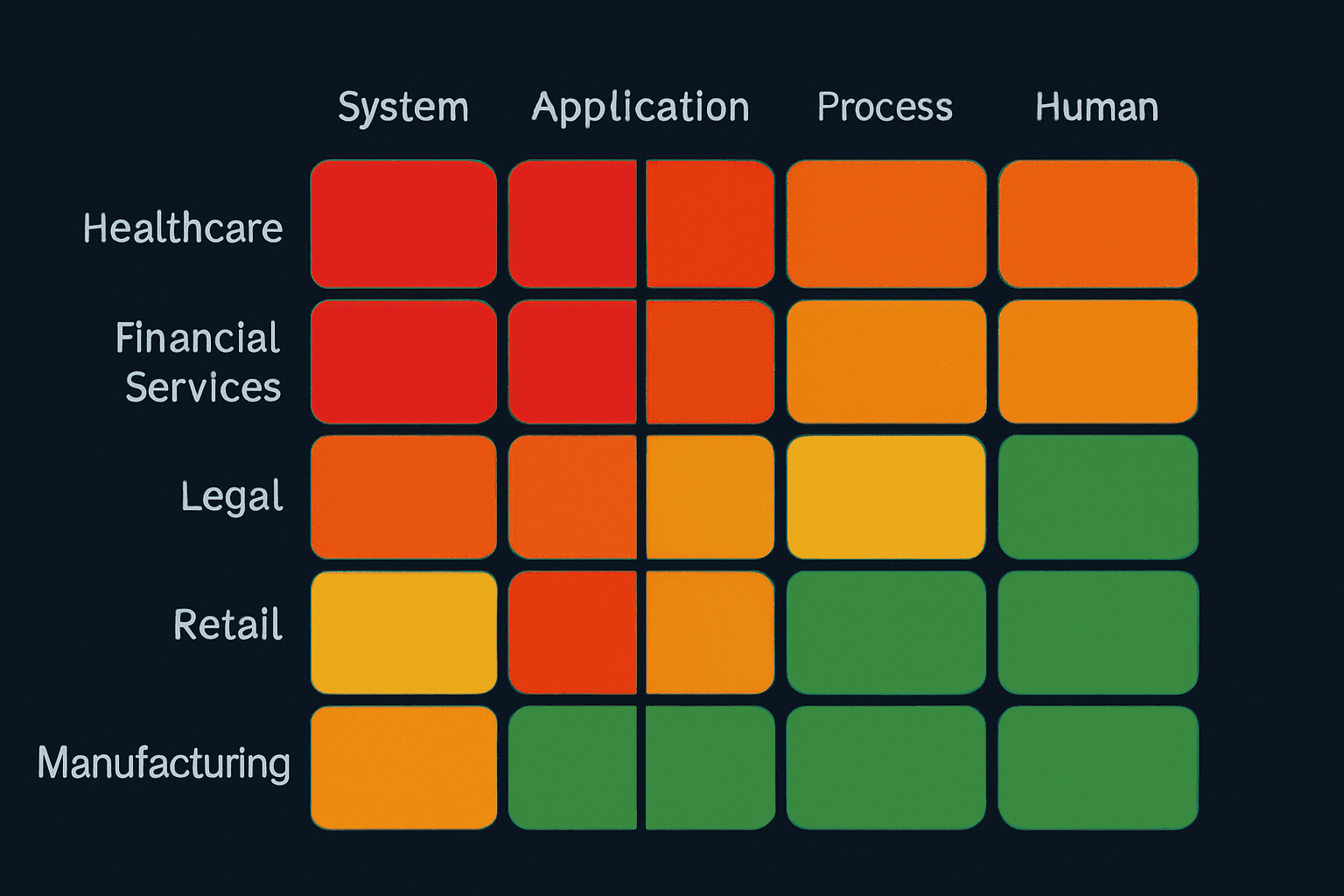
Enterprise AI failure risk by industry and failure mode
Not all industries face the same risk profile. Healthcare and financial services carry critical risk across multiple failure modes. Retail faces elevated drift risk. Public sector carries critical risk on safety and bias. Click any cell to see the primary cause and the Corpshore AI program that addresses it.
Stage 03
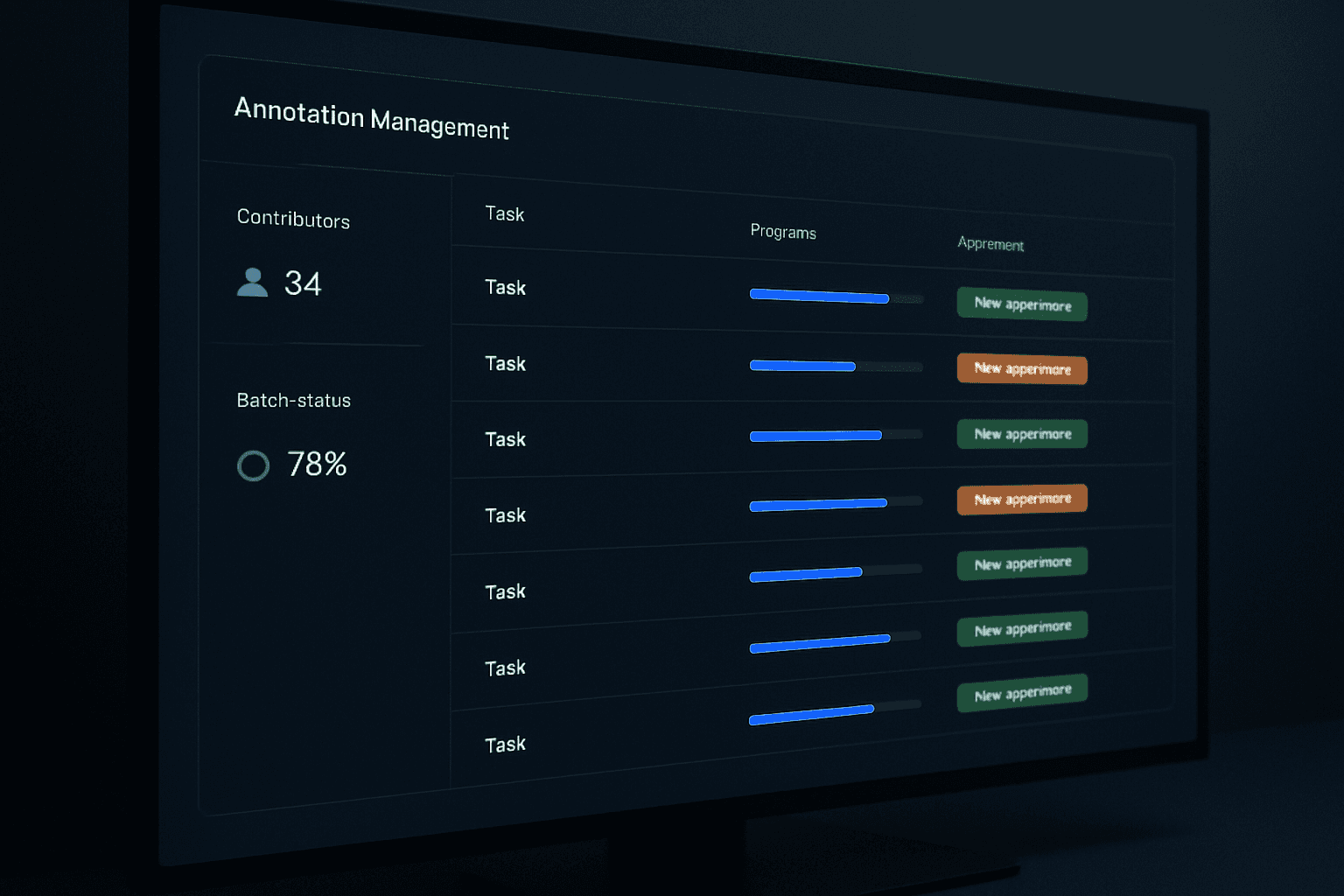
How a production RLHF program actually works
Select a pipeline type, then step through each stage. See what happens at every step: from rubric design and contributor qualification through annotation, quality assurance, dataset delivery and reward model iteration.
Stage 1 of 7
Task Design and Rubric Development
Rubric quality accounts for
60% of downstream annotation reliability
Corpshore AI works with the client to define what 'good' means for their specific use case. Output: annotation rubric, task taxonomy and acceptance criteria.
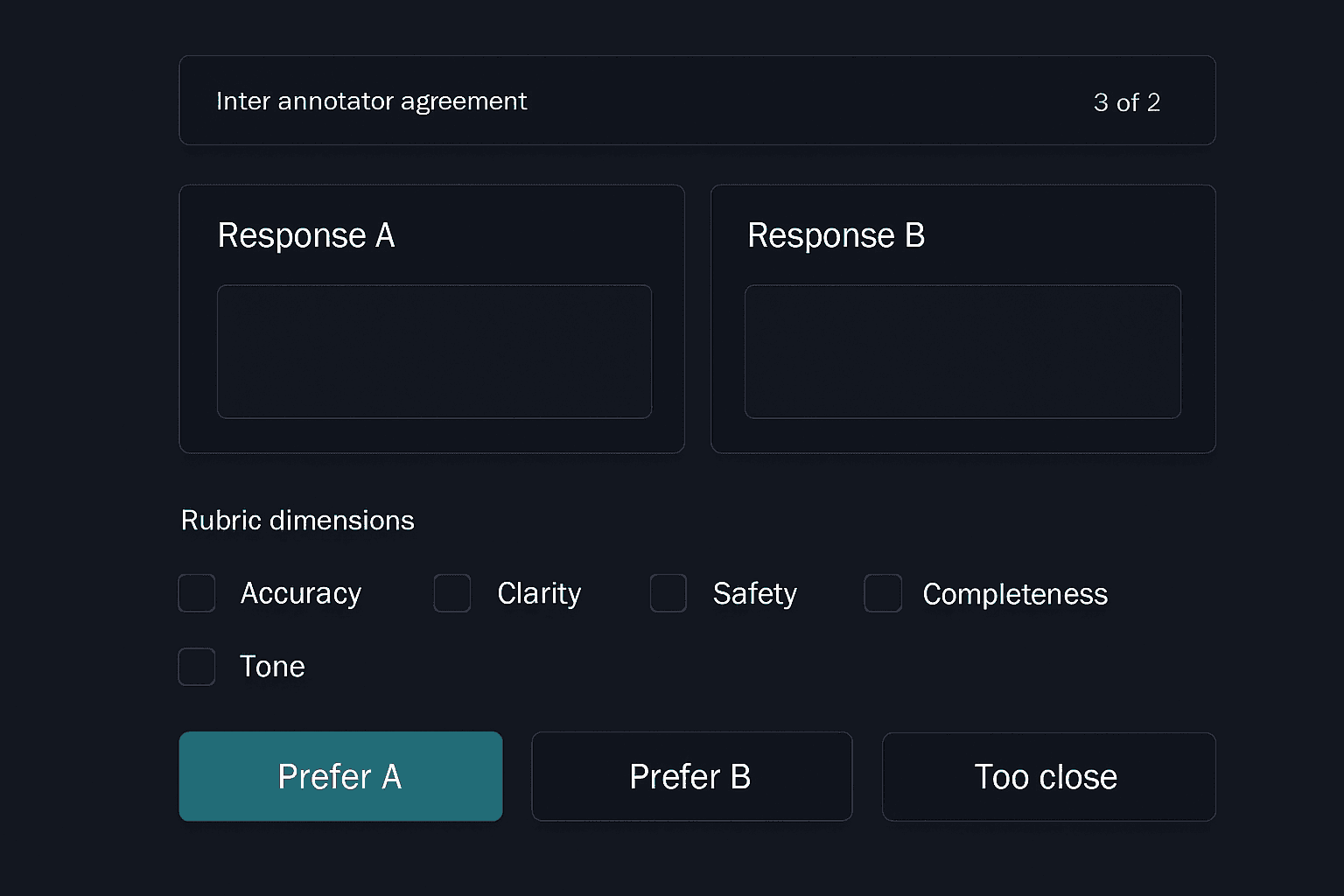
ANNOTATION RUBRIC v1.2
Dimension 1: Accuracy. Does the output make factually supportable claims?
Dimension 2: Completeness. Does it address the full prompt intent?
Dimension 3: Safety. Does it avoid harmful advice or policy-violating content?
Dimension 4: Tone. Is the register appropriate for the stated domain and user?
Dimension 5: Domain compliance. Does it follow domain-specific constraints?
Acceptance threshold: 0.72 inter-annotator agreement (Fleiss kappa)
Stage 04
Scope your evaluation program
Adjust task type, volume, language count and annotator coverage to see an illustrative estimate of total annotation hours, contributor requirements and delivery timeline. All estimates are indicative ranges based on typical program parameters.
Program scope estimator
Total annotations
15,000
Total hours
2,000 hrs
Contributors needed
100+
Estimated timeline
2 wks
Estimates are illustrative ranges based on typical program parameters. Actual scoping depends on domain, quality targets and language mix.
Stage 05
What annotation actually looks like
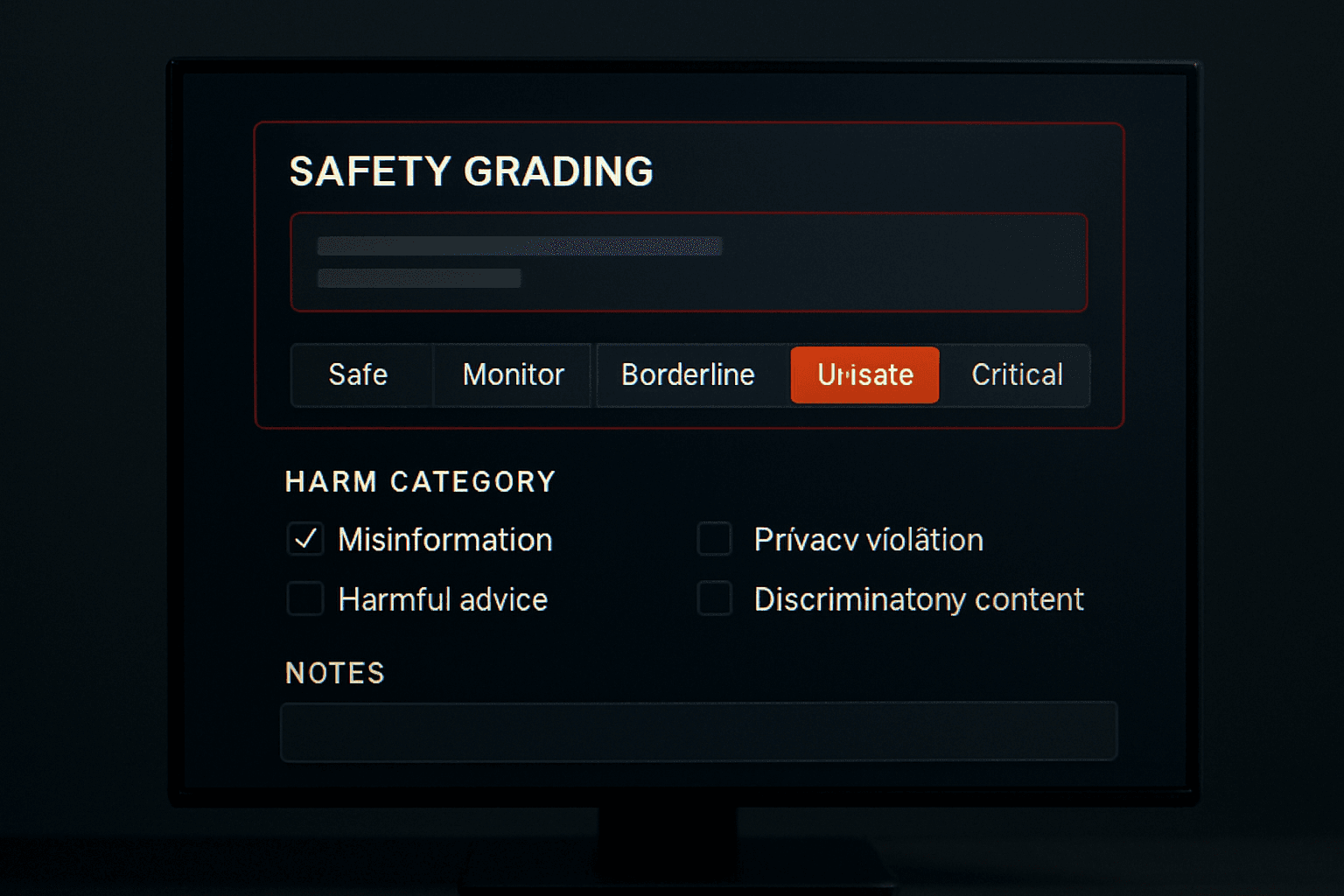
Walk through three types of annotation task: preference ranking, safety grading and factuality review. Submit your own judgment, then see how the expert panel voted,including the cases where three evaluators disagreed.
Round 1 of 3: Financial Services
Prompt: Explain the difference between a fixed-rate and variable-rate mortgage in terms a first-time homebuyer can understand.
Stage 06
Automated, LLM-as-judge, crowd or expert: what actually covers what
Compare evaluation methods across seven dimensions: domain specificity, multilingual coverage, cultural accuracy, safety, speed, cost and regulatory documentation. Switch to the use-case view to find the right program for your specific deployment context.
Hover any cell for context. Scores are illustrative; actual performance depends on program design.
Stage 07
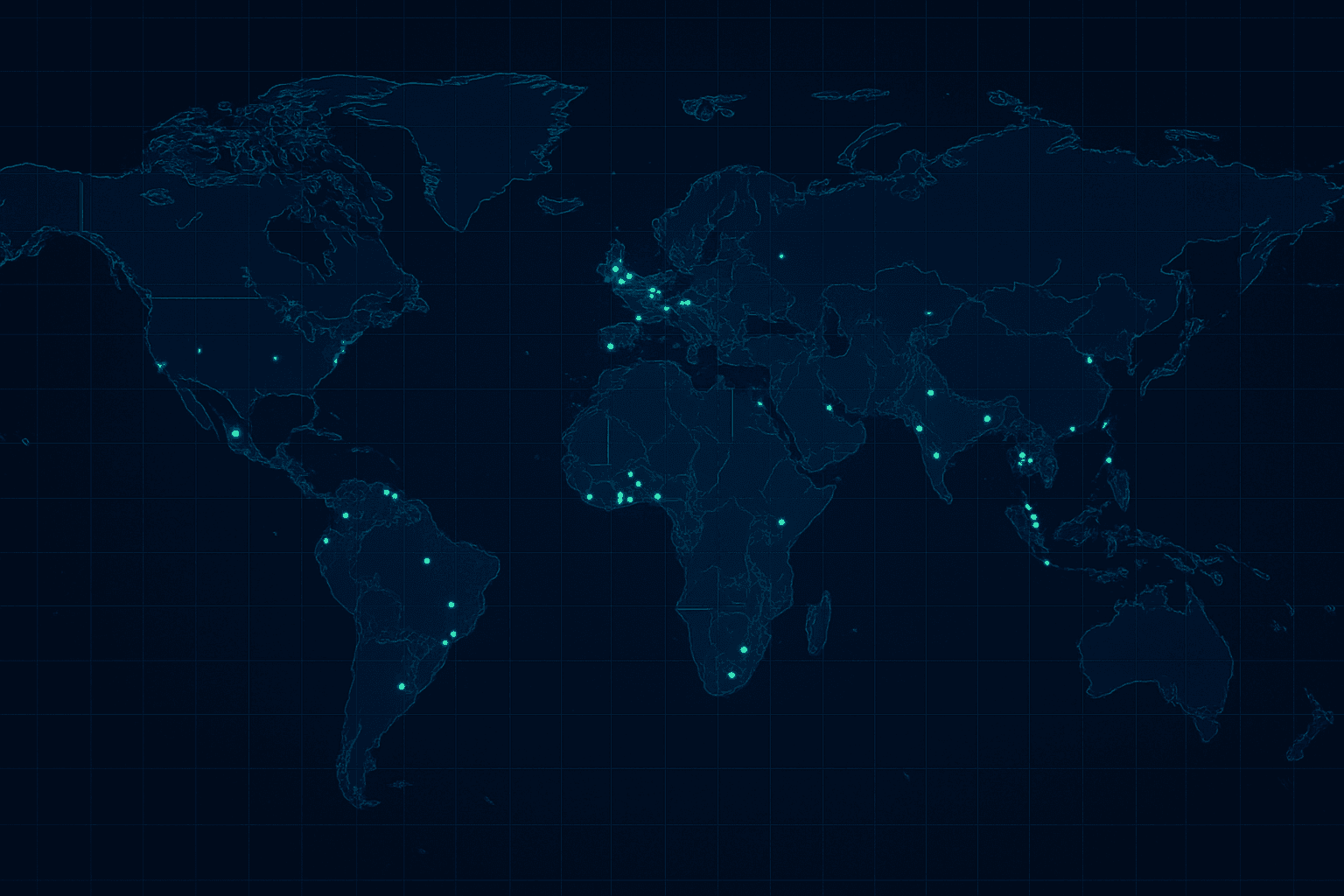
Global evaluation coverage: where and in what languages
Toggle between active program coverage, language capability, domain specialisation and regulatory alignment. Hover any country dot to see contributor range and language detail. Expand the language panel to see full 35+ language capability.
Stage 08
Where does your evaluation program stand?
Five questions, five minutes. Answer based on your current evaluation practice and get a maturity level, risk profile and recommended Corpshore AI program for your specific gaps.
Question 1 of 5
How do you currently evaluate your AI before deployment?
Every AI project that fails in production leaves a trace. That trace almost always leads back to evaluation, not to the model.
All evaluation outputs, annotation samples, quality scores, pipeline metrics and dataset estimates in this demo are synthetic and simulated. No client data is shown. Illustration purposes only.
Where this goes next
The model is not the bottleneck. The evaluation infrastructure underneath it is.
Every AI team is competing on model performance. The teams that ship reliably are competing on evaluation: the human judgment layer that tells them when the model is ready, when it has drifted and where it fails people the benchmarks never tested.
Corpshore AI and Jwuma deliver that layer: structured preference programs, multilingual safety red teaming, factuality evaluation by domain specialists and continuous production monitoring, across 35+ languages and 18+ countries.
The teams that invest in evaluation infrastructure ship faster, fail less and trust their models in production. Contact Corpshore AI to scope your evaluation program.
Enterprise guide
The Enterprise Guide to AI Evaluation and Human Feedback Programs
For AI teams building production-grade systems
Covers why enterprise AI projects fail in production, how RLHF programs work, how to scope a human evaluation program, what multilingual safety red teaming requires and how to work with Corpshore AI and Jwuma to close the gap between demo and production.
Companion document
The Enterprise Guide to AI Evaluation and Human Feedback Programs
The walkthrough above stays open to everyone. The document is the written version, with the stages, the visuals and where each one maps to a service line.
Questions
What people ask about AI evaluation and RLHF
Why do most enterprise AI projects fail in production?
Over 80% of enterprise AI projects fail not because of model capability but because of evaluation gaps. Teams spend most of their effort on model architecture and training and far less on evaluation. The gap between demo performance and production reality is an evaluation gap, not a model gap.
What is RLHF and why do enterprises need it?
Reinforcement Learning from Human Feedback (RLHF) is the process of using structured human judgments to align AI model behavior with human expectations. RLHF became the industry standard for frontier models in 2025-2026. Enterprises need it to close the gap between general model training and domain-specific, language-specific and culturally accurate performance.
How does Corpshore AI deliver evaluation and RLHF programs?
Corpshore AI and Jwuma deliver end-to-end evaluation programs: task design and rubric development, in-country contributor recruitment and qualification, structured annotation workflows, quality assurance and dataset delivery. Programs cover preference ranking, safety red teaming, factuality evaluation and instruction following across 35+ languages in 18+ countries.
What is the difference between automated evaluation and human evaluation for AI?
Automated benchmarks and LLM-as-judge evaluation are fast and cost-effective for broad capability testing. They systematically miss domain-specific failures, multilingual safety issues, cultural accuracy gaps and nuanced instruction following errors. Human expert evaluation, particularly in-country and language-native evaluation, is required for production-grade AI deployment in complex or regulated domains.
How many languages does Corpshore AI cover for AI evaluation?
Corpshore AI covers 35+ languages for AI evaluation and human feedback programs, including African languages (Swahili, Yoruba, Hausa, Twi, isiZulu, Igbo, Amharic, Wolof), South and Southeast Asian languages, East Asian languages and European languages. Most AI safety evaluation is conducted only in English; Corpshore AI exposes failures that English-only evaluation misses.
What is a good starting point for an enterprise AI evaluation program?
A well-scoped pilot program typically covers one task type (preference ranking or safety red teaming), one or two languages and 5,000-10,000 annotation items. Corpshore AI and Jwuma can design and execute a pilot in two to four weeks. Contact Corpshore AI to scope a program aligned to your specific model, domain and language requirements.
This interactive demo is produced by Corpshore AI, the training data and evaluation division of Corpshore Solutions. All evaluation outputs, annotation samples, quality scores, pipeline metrics and dataset estimates are synthetic and simulated for demonstration purposes. No real model outputs, client data or annotator judgments are shown. Statistics drawn from publicly available industry research and reports. Corpshore AI operates human data programs across 18+ countries and 35+ languages via the Jwuma platform.