Social Demos, episode 5
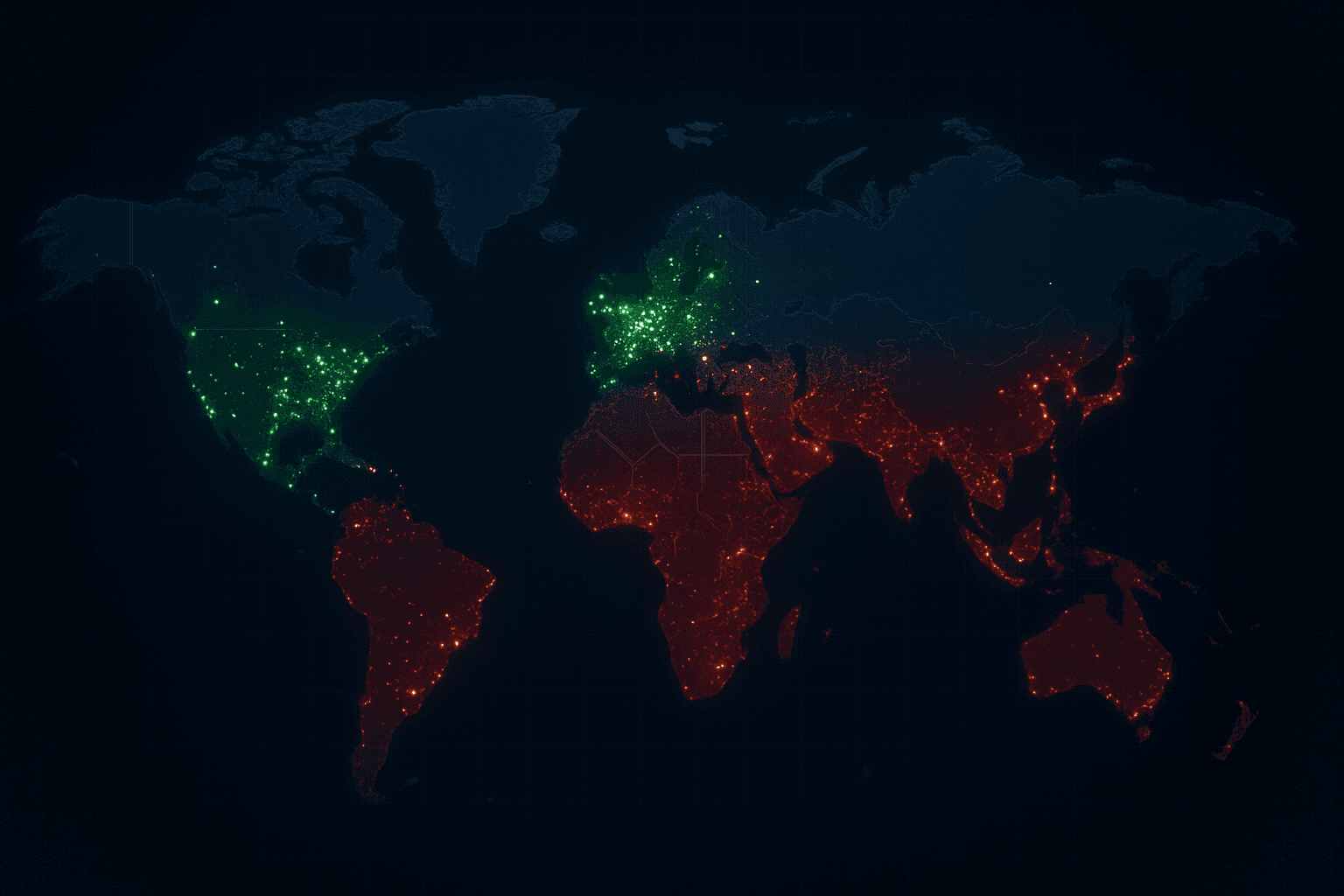
Your fashion AI is blind to 80% of the world's clothing.
Visual search, virtual try-on, defect detection, style recommendation: every fashion AI system is only as good as the labeled images it learned from. If those images came from one part of the world, your model will fail in the rest of it.
All images, annotations, defect samples, quality scores and dataset metrics shown are synthetic simulations. No client data is shown. Illustrative figures only.
Stage 01
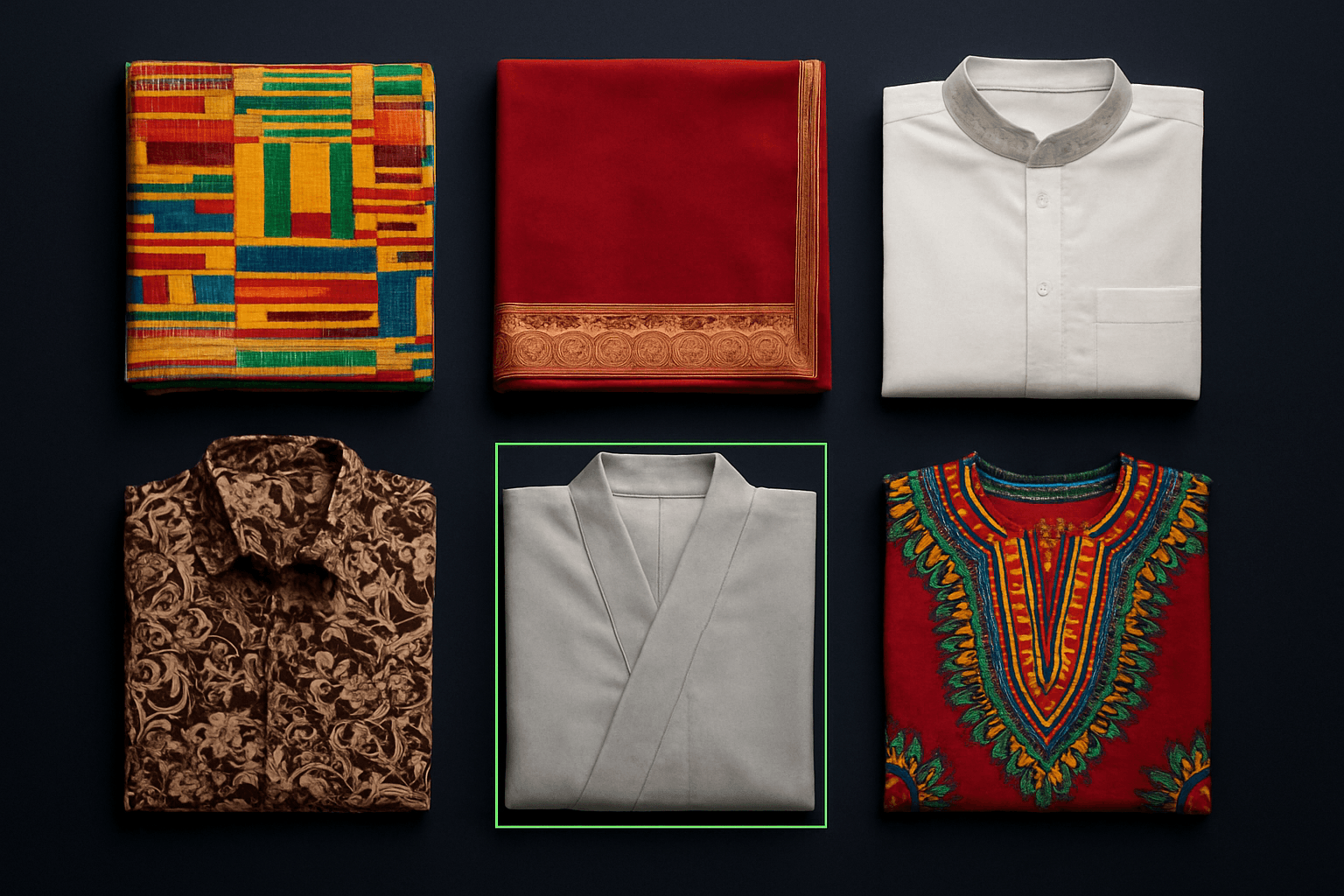
40+ garment traditions that fashion AI cannot see
Browse the taxonomy of culturally distinct garments that Corpshore AI collects and annotates. Filter by region or garment type. Click any garment to see the full annotation attribute set, where AI models fail on it and what the Corpshore AI collection program covers.
40 of 40 garment types
Annotation complexity distribution
40 garment types across 9 regions
Stage 02
What annotating a culturally specific garment looks like
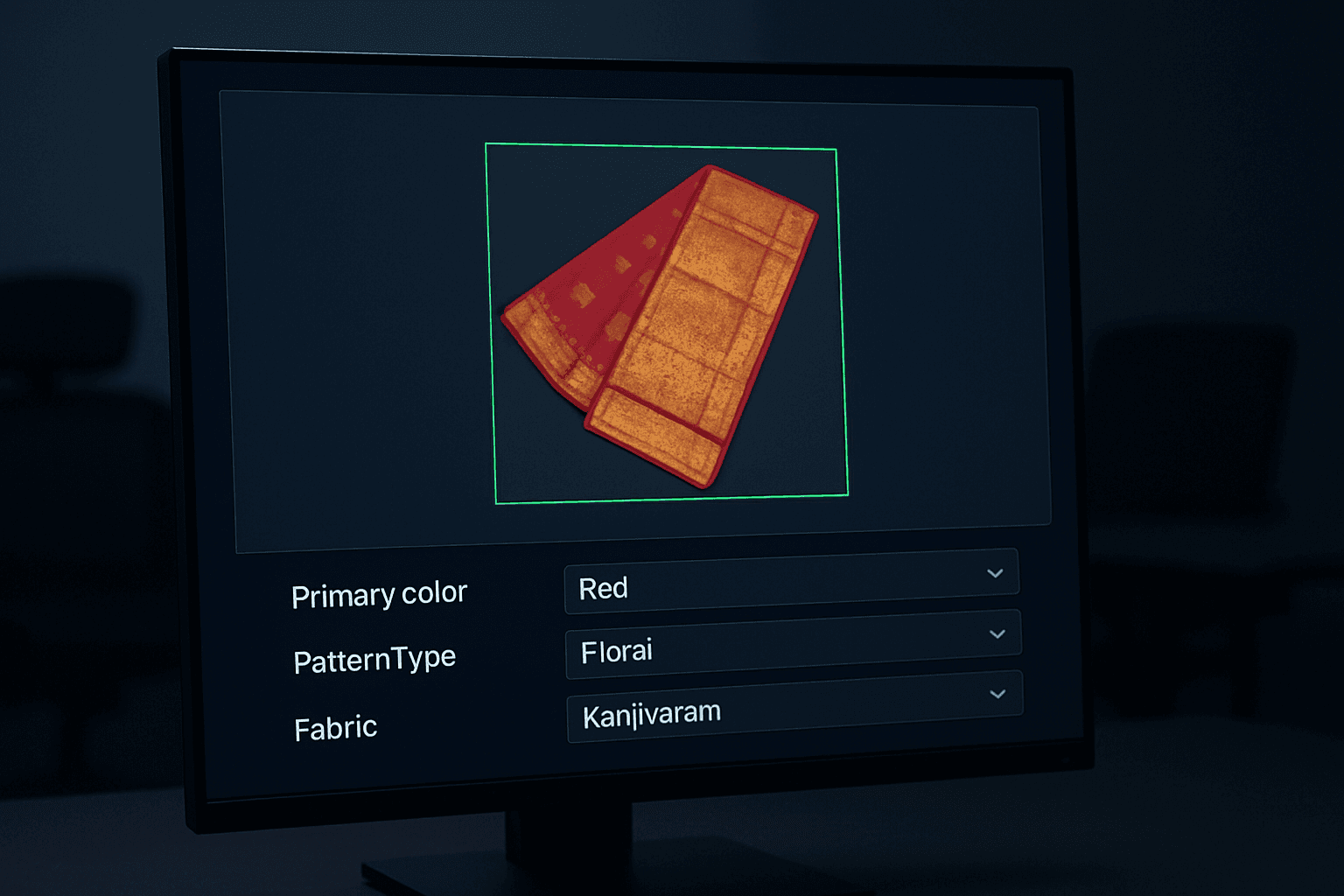
Walk through a three-step annotation session: draw a bounding box, select garment attributes and submit a QA review. The simulation shows a common annotation error for each garment and lets you place the correct box before moving to attribute tagging.
Bounding box
Step 1 of 3: Draw a bounding box around the garment. The example below shows a common annotation error: the box clips the garment at the edges. Switch to draw mode to place the correct box.
Annotation issues found
- Box clips the pallu end by 15%
- Pattern type labeled 'Printed floral' when it is a woven Zari border
Stage 03
Fabric defect detection from the factory floor
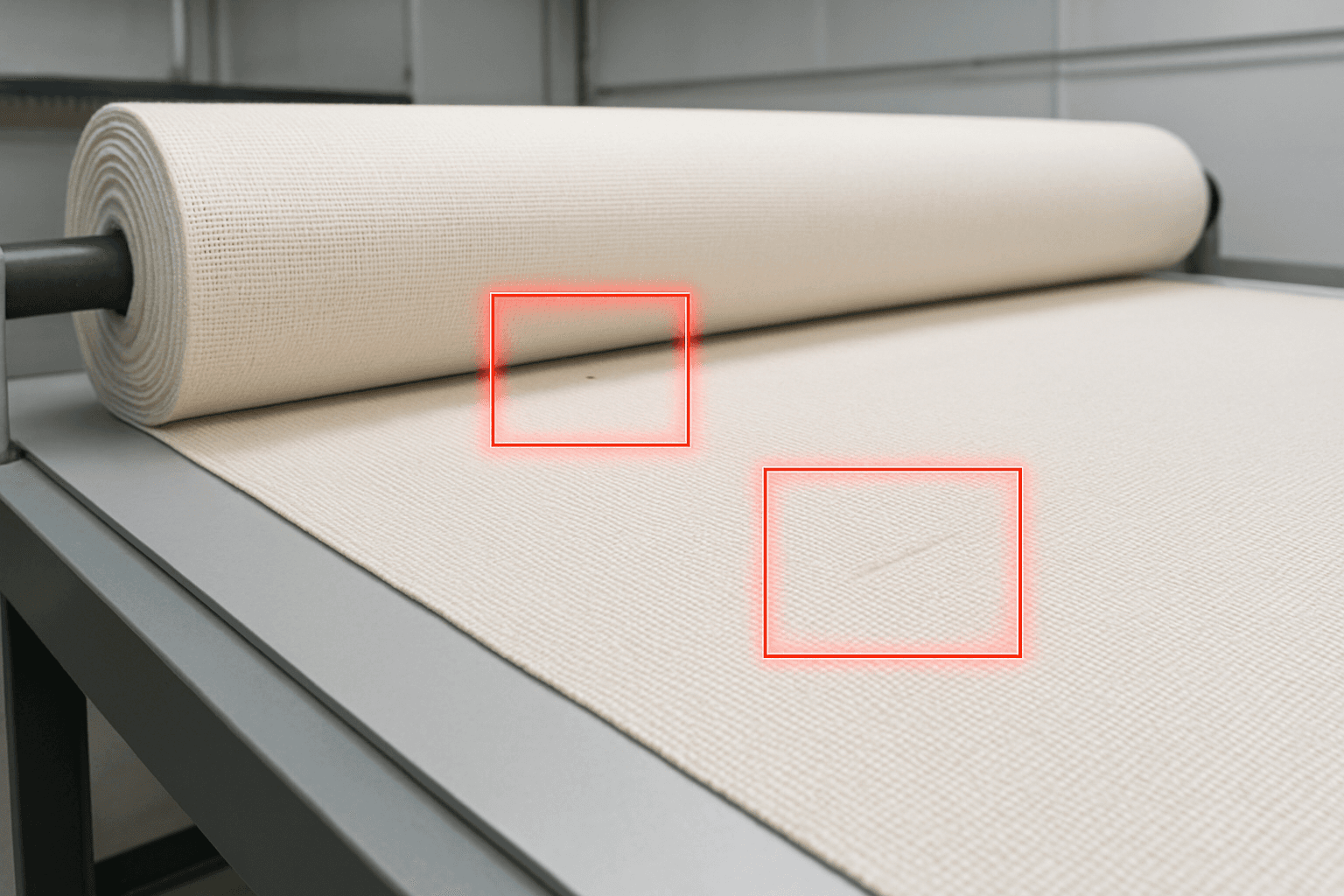
Fashion AI is not only for consumer-facing applications. Automated fabric inspection on the production line requires labeled defect datasets for each fabric type and manufacturing context. Select a fabric type to see the simulated inspection output and explore the defect taxonomy.
2
Defects found
0.8%
Defect area
340 m/min
Inspection speed
Detected defects
Click a defect box on the swatch or a chip below to see detection detail. All samples are synthetic.
Stage 04
Scoping a virtual try-on diversity dataset
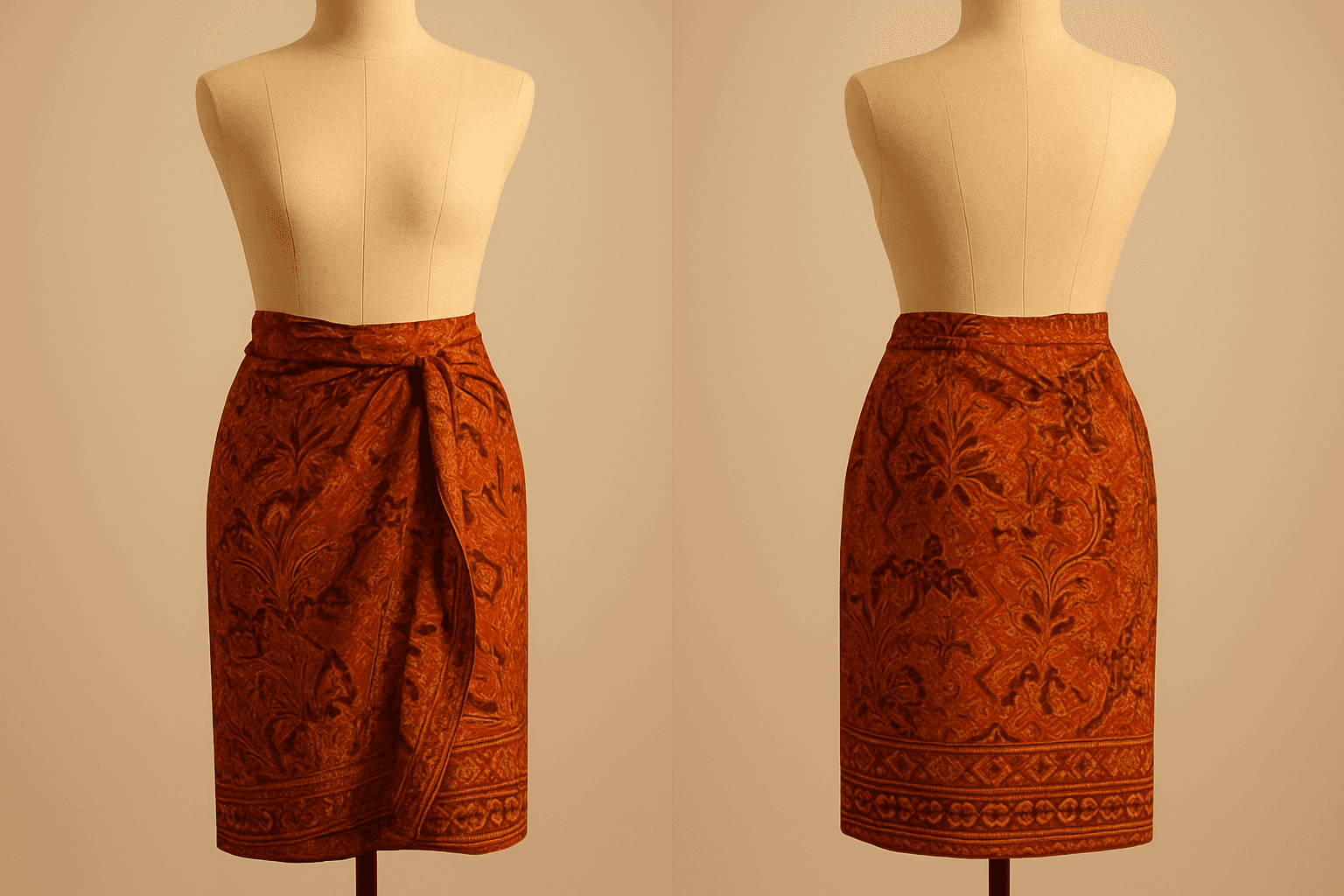
Virtual try-on depends on body-garment pairing images that cover the range of body types, skin tones and pose configurations your users represent. Use the configurator to scope a try-on training dataset: adjust garment count, body diversity level and pose coverage to see the image volume estimate, delivery timeline and geographic scope.
Garment categories
Unique garments
100Body diversity level
ExpandedPose coverage level
Front + side + 45-degreeProgram estimate
750K
Image pairs
14-20 weeks
Delivery
3-4
Body archetypes
8-12
Markets
Body archetypes: 3-4 body proportion archetypes, broad size range
Skin tone anchors: 6 skin tone anchors
Pose sessions per contributor: 3 sessions per contributor (front / side / 45-degree, 15 min)
Geographic spread: 8-12 contributor markets
Estimates are simulated projections based on standard program parameters. Actual scope is agreed at program design stage.
Stage 05
Where fashion AI benchmark data comes from, and where it does not
Toggle between fashion AI benchmark coverage by country and Corpshore AI active programs. Hover any dot for garment tradition detail. Expand the benchmark gap table to see what the standard fashion AI benchmarks contain versus what they are missing.
6
Well covered
7
Partial
12
Poor
8
No coverage
Hover a dot for country detail. Coverage ratings are indicative and based on public benchmark dataset analysis.
Stage 06
From program brief to annotated dataset delivery
Select an annotation type, then click any pipeline stage to see what happens at that step for that task, including what the cultural accuracy review stage does that most data vendors skip entirely.
Annotation type: click to see what each stage does for that task
Select a stage above to see what happens at that step for the selected annotation type.
A visual search model that cannot recognize a kente cloth, a batik print or a saree is not a global fashion AI product. It is a Western fashion AI product with a gap-filled catalog.
All images, annotations, defect samples, quality scores and dataset metrics in this demo are synthetic and simulated. No client data is shown.
Where this goes next
Fashion AI that works everywhere requires training data from everywhere.
The gap between what fashion AI benchmarks contain and what the world actually wears is not an academic problem. It is a product failure waiting to happen: a visual search that returns no results, a try-on that distorts, a defect detector that misses the pattern, a recommendation engine that shows the wrong items to the wrong users.
Corpshore AI collects, annotates and delivers fashion and textile image datasets at global scale. Studio and field collection across 18+ countries. Cultural accuracy review by community-sourced reviewers. Annotation in every task type: bounding box, segmentation, keypoint, attribute, OCR, multi-task. 40+ garment tradition categories. Fabric defect datasets from manufacturing partners. Try-on diversity datasets built to spec.
If your fashion AI works in New York and fails in Lagos, Dhaka and Guadalajara, the training data is where to start.
Enterprise guide
Fashion and Textile AI Training Data: A Buyer's Guide
For fashion AI teams building global products
Covers the global garment coverage gap, how to scope a fashion image annotation program, what fabric defect detection datasets require, how virtual try-on diversity data is collected and how to work with Corpshore AI and Jwuma to deliver production-quality fashion training data.
Companion document
Fashion and Textile AI Training Data: A Buyer's Guide
The walkthrough above stays open to everyone. The document is the written version, with the stages, the visuals and where each one maps to a service line.
Questions
What people ask about fashion AI training data
What training data does a fashion AI system need?
Fashion AI systems require labeled image datasets with annotations appropriate to the computer vision task: image classification labels, bounding box annotations, segmentation masks, keypoint landmarks, attribute tags or combinations. Dataset requirements vary by application: visual search needs attribute-rich annotations, defect detection needs defect-category labels and virtual try-on needs body-garment pairing datasets with pose and body diversity.
Why do fashion AI models fail in non-Western markets?
Most public fashion AI benchmark datasets were constructed using Western fashion e-commerce imagery and contain approximately 13 garment categories, almost all from Western casual and formal wear traditions. A model trained or fine-tuned on these benchmarks will have no learned representation of culturally specific garments from South Asia, Southeast Asia, Sub-Saharan Africa, the Middle East, Latin America or East Asia, causing failure on recognition, search and recommendation tasks for users from those regions.
What garment types does Corpshore AI cover in its fashion data programs?
Corpshore AI can collect and annotate image datasets covering 40+ culturally distinct garment types including sarees, salwar kameez, dashiki, agbada, kente cloth, kanga, boubou, thobe, abaya, djellaba, batik shirts, kebaya, ao dai, kimono, hanbok, cheongsam, poncho, huipil and others, in addition to standard Western garment categories. New garment traditions can be added to programs on client request.
What is cultural accuracy review in fashion AI annotation?
Cultural accuracy review is a step in the annotation pipeline where a specialist reviewer with cultural and regional knowledge of the garment tradition being annotated checks that garment names, attribute categories, occasion tags, styling conventions and regional variant distinctions are correctly applied. This step prevents systematic annotation errors that occur when annotators label garments from unfamiliar cultural traditions without adequate reference material or community knowledge.
What data does a fabric defect detection AI need?
Fabric defect detection models require labeled image datasets containing examples of each defect category the model must detect: weave skips, weft and warp breaks, color bleeds, print misregistration, holes, thread pulls, pilling, oil stains and others, across each fabric type and manufacturing environment the model will be deployed in. Minimum dataset sizes range from 2,000 to 5,000 labeled defect samples per fabric type per defect category for a production-quality model.
How does Corpshore AI deliver fashion and textile training datasets?
Corpshore AI delivers fashion and textile datasets in standard ML-ready formats including COCO JSON, Pascal VOC XML and YOLO format for object detection annotations, with separate delivery files for classification labels, attribute tags and segmentation masks. Each delivery includes an annotation manifest, a consent documentation bundle, a cultural accuracy sign-off document and a quality report. Contact info@corpshore.ai for format specifications and program scoping.
This interactive demo was produced by Corpshore AI, the AI training data division of Corpshore Solutions Corporation (Toronto, Canada) and Jwuma, Corpshore AI's global contributor platform. It simulates a fashion and textile AI training data collection, annotation and evaluation program using entirely synthetic data. Corpshore AI and Jwuma collect, annotate and deliver production-quality image datasets for fashion AI systems across 40+ garment tradition categories, 18+ countries and all major computer vision annotation task types including bounding box, segmentation mask, keypoint, attribute tagging and OCR. Contact us at info@corpshore.ai or visit jwuma.com.