Social Demos, episode 4
The world speaks 7,000 languages. Voice AI knows about 40.
Every enterprise voice agent deployed outside English is running on insufficient training data. The gap is not a model problem. It is a data problem. Here is what closing it looks like.
All recordings, transcripts, evaluations and metrics shown are synthetic simulations. No real audio data is captured or transmitted. Illustrative figures only.
Stage 01
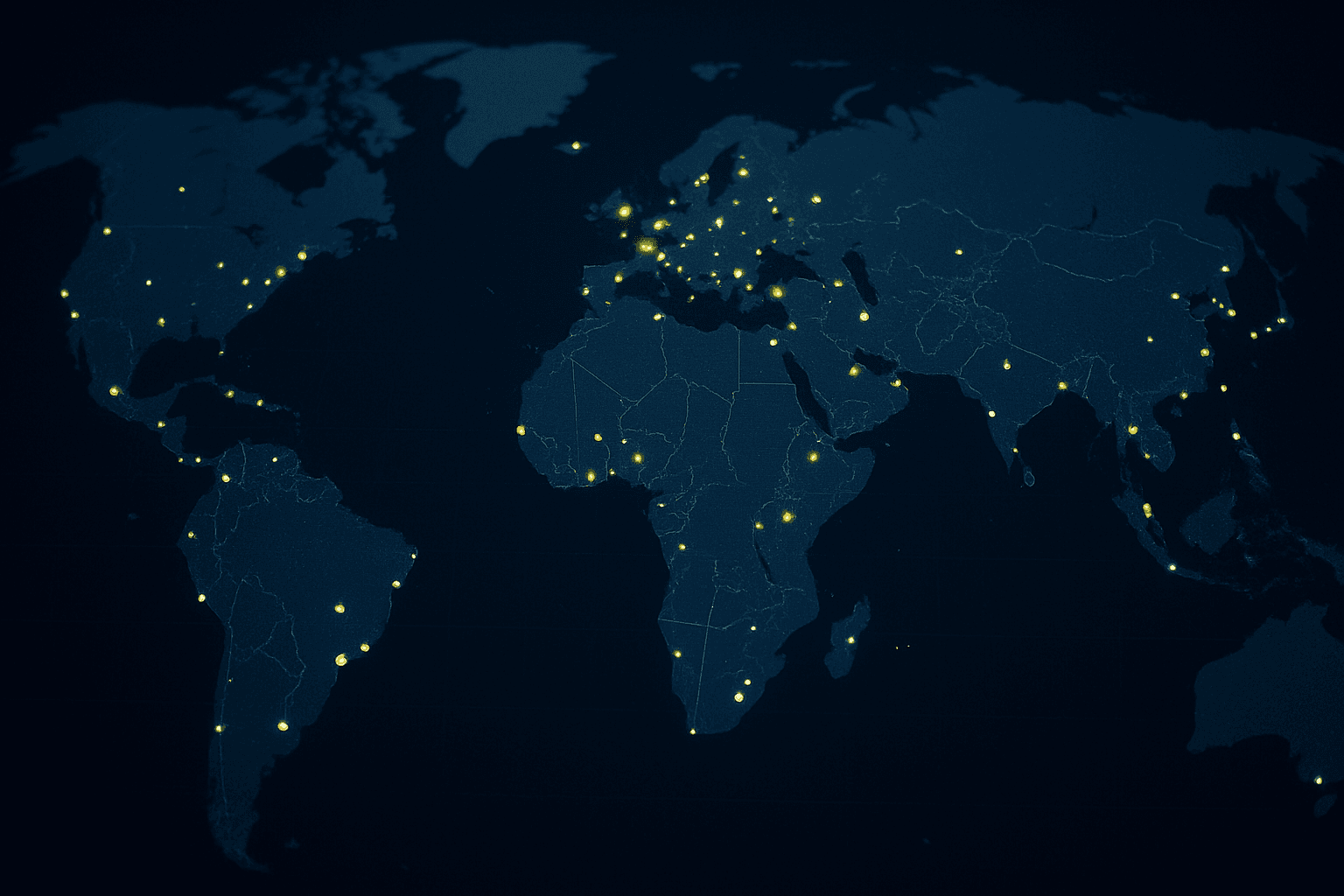
Where voice AI coverage ends and the world begins
The global language map looks very different depending on which lens you use. Toggle between coverage, active programs, language endangerment and language families to see the full picture. Hover any country for detail. Use the search to find a specific language, country or language family.
7,000+
Languages tracked
~40
With voice AI coverage
35+
Active Corpshore AI programs
Illustrative figures. Dot positions are approximate country centroids. Hover any dot for detail.
Stage 02
13 languages voice AI barely knows
These are the languages that enterprise voice AI teams run into when they expand beyond the top ten commercial languages. Each card shows the speaker population, the current state of voice AI coverage and where Corpshore AI's programs stand. The final card explains the origin of the Jwuma name.
01 / 13
Twi (Akan)
Origin of the Jwuma name
9M+
speakers
Geography
Ghana
Voice AI coverage
No commercial STT vendor
Program status
Active Corpshore AI recording program
Part of the Akan language family, with a writing system and rich oral tradition. One of the inspiration languages behind the Jwuma name.
Auto-advancing
Stage 03
What a contributor session looks like
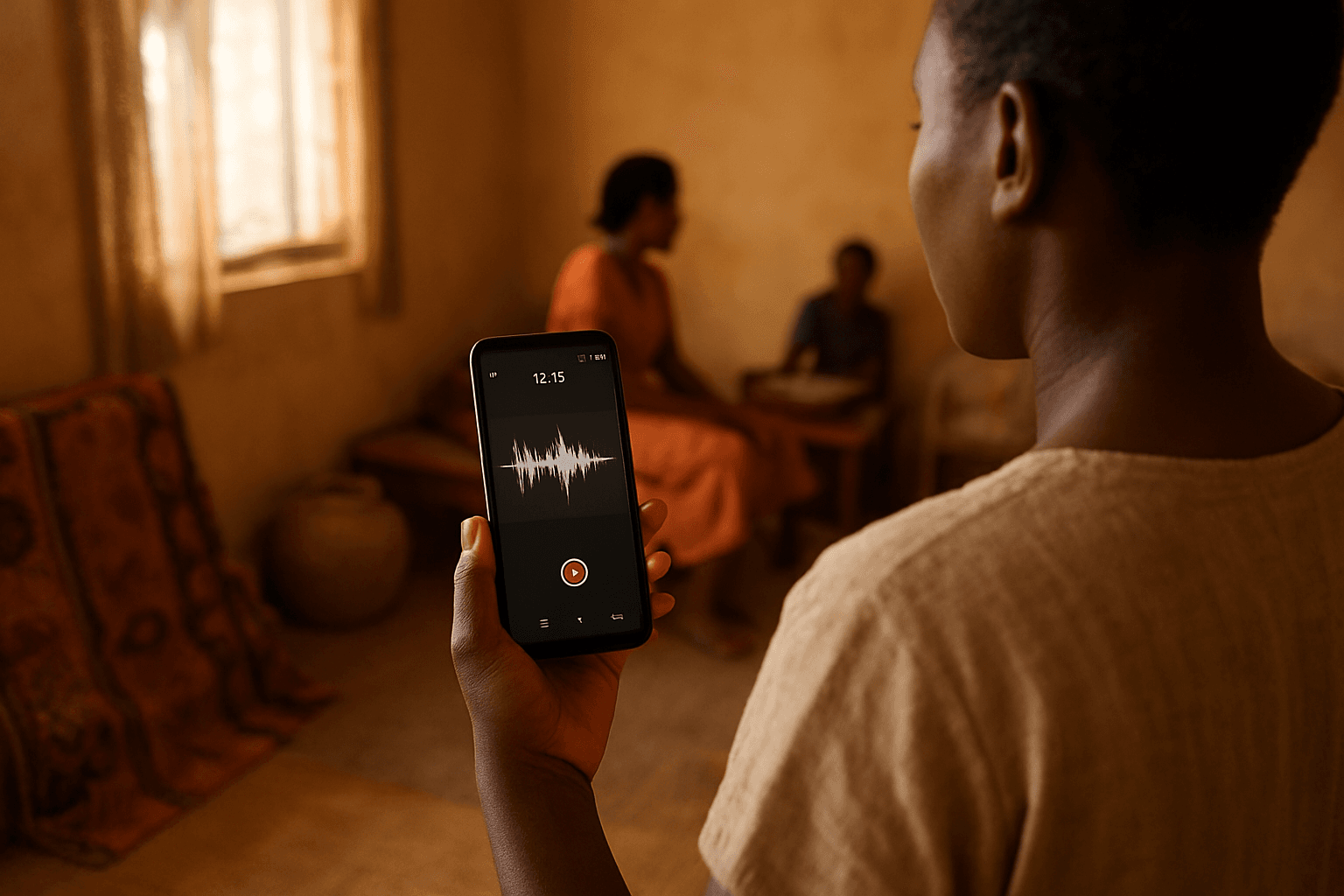
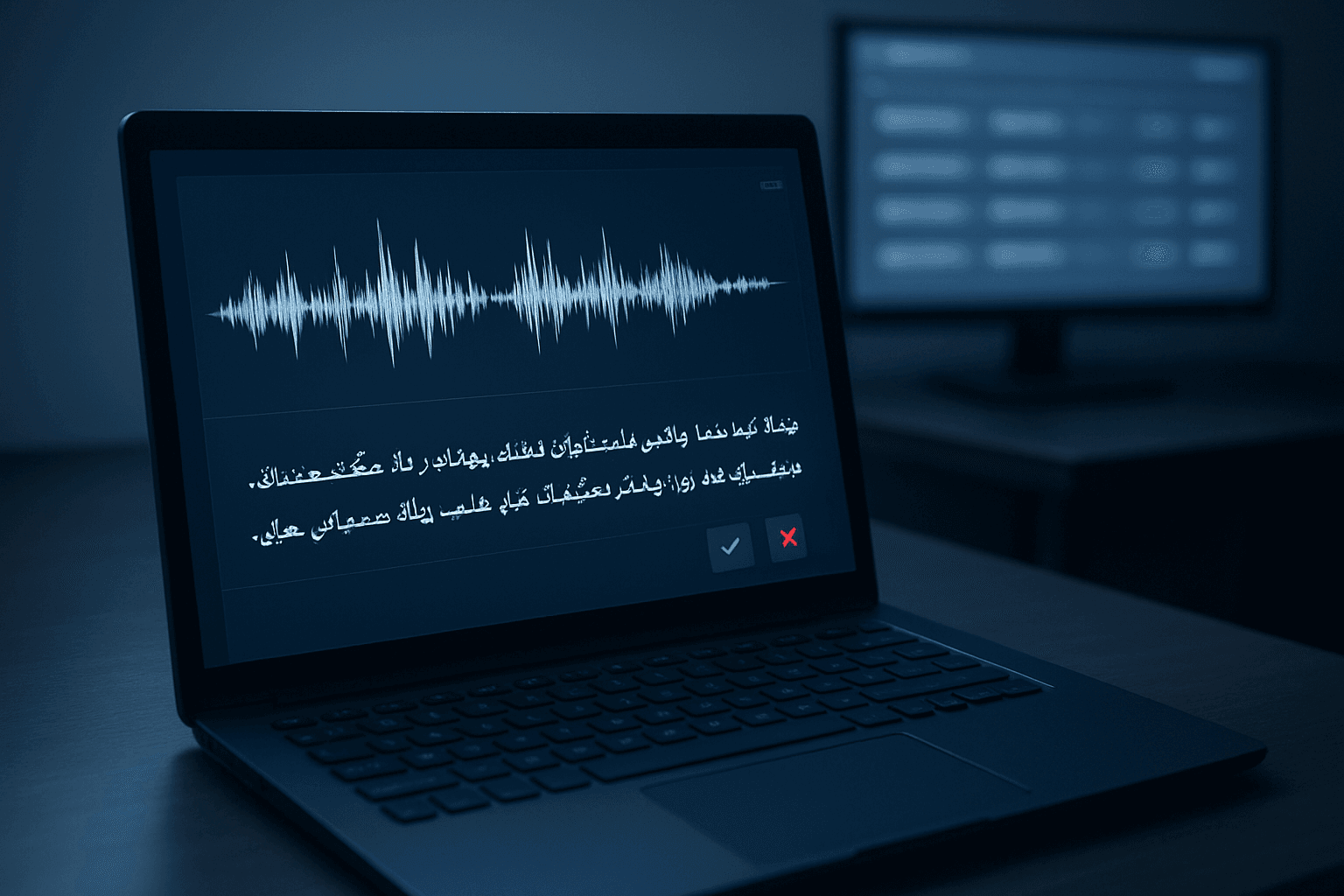
Contributors on the Jwuma platform complete structured recording sessions: select a language, receive a prompt set, record each prompt, submit for QA review and get paidper accepted recording. Select a language below, then walk through the five-step flow. No audio is captured in this simulation.
Choose a language. You will be assigned prompts in that language to read aloud.
Rates are illustrative. Actual rates vary by language, task type and program.
Stage 04
Dialects are not the same language twice
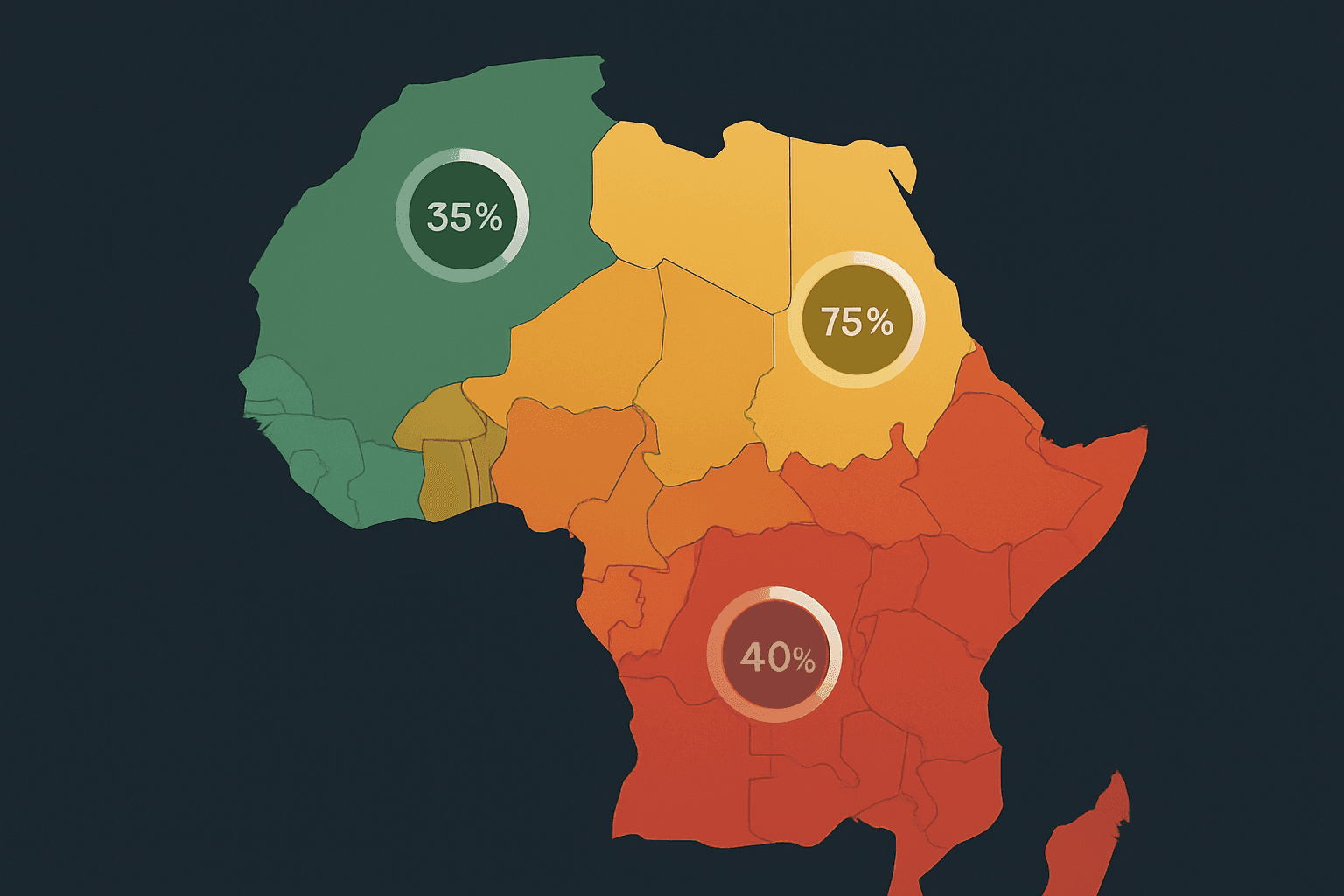
A Spanish corpus built on Mexican Spanish will fail on Rioplatense. An Arabic model trained on MSA will fail on Moroccan Darija. The dialect problem is real, structural and almost always underfunded. Select a language to see its dialect tree, the current Corpshore AI corpus hours by dialect and the coverage gap for your target geography.
Spanish: estimated corpus coverage
Mexican Spanish
Rioplatense Spanish
Colombian Spanish
Caribbean Spanish
Castilian Spanish
Total in program: 28h across 5 dialects
Coverage gap calculator
Enter a target deployment geography to see the estimated data requirement.
Stage 05
Can you tell human from synthetic?
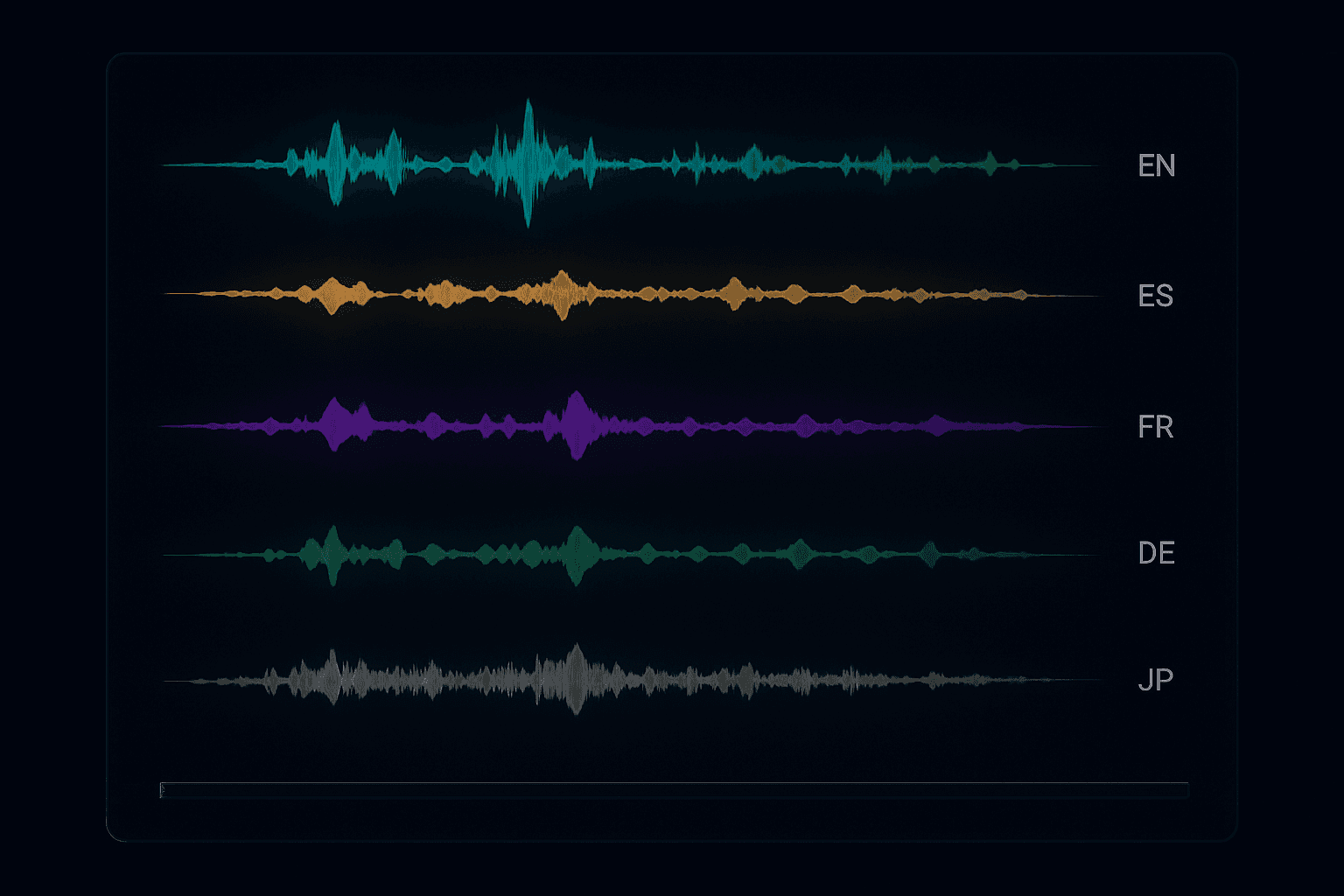
Human evaluation of AI-generated speech is harder than it sounds, in English. In Swahili or Yoruba, where evaluators need to be native speakers to catch prosodic failures and code-switching errors, it is much harder to source at scale. Three rounds. Pick the human recording. The third round is the hard one.
A common phrase in English
English
"Please hold while I transfer your call to the right department."
Which sample was recorded by a human speaker?
Select a sample to continue.
Stage 06
From program brief to corpus delivery
Every multilingual speech dataset goes through the same stages. What changes is the mode: a speech corpus, a transcription corpus and an evaluation dataset require different worker profiles, different task definitions and different QA gates. Toggle between modes and click any stage to read the full task definition and worker tier.
What is at stake
AI and endangered languages: the paradox
The paradox
AI systems trained on majority-language data are accelerating the economic marginalization of speakers of minority and endangered languages. Voice assistants that do not understand your language signal, subtly and repeatedly, that your language does not matter. At the same time, the commercial demand for diverse speech data has created the first market-rate incentive in history to record, transcribe and document languages that were never commercially viable to preserve before. The same technology that threatens languages may be what saves some of them.
What is at stake
Of the approximately 7,000 languages currently spoken, UNESCO estimates that roughly 40% are endangered. A language that is not spoken by children is a language in the final stages of its life. The oral knowledge encoded in an endangered language (its metaphors, its ecological vocabulary, its conceptual distinctions) disappears when the last native speaker dies. No translation captures what is lost. Corpus collection does not reverse language death. But it preserves evidence (recordings, transcriptions, documented structure) that gives future communities something to work with if they choose to revive what was lost.
The Hawaiian case and what followed
Hawaiian had fewer than 50 children entering school as native speakers in 1987. A structured immersion school program, Hawaiian Punana Leo, grew the speaker population from near extinction to tens of thousands of active speakers over three decades. That revival produced new demand for Hawaiian-language digital infrastructure (voice interfaces, keyboards, auto-correction) and that demand is now producing corpus collection programs. The sequencing matters: community revitalization precedes technology adoption, and technology adoption requires data. Corpshore AI's role is in the third stage: building the data layer that language communities and technology developers need. We do not dictate which languages matter. We build the infrastructure to collect data in the ones communities and clients prioritize.
What Jwuma is doing
Jwuma was named for a Twi word. That choice was deliberate. Twi is a language of the Akan people of Ghana: 9 million or more speakers, a rich oral tradition, a writing system and no commercial speech AI infrastructure. The Jwuma platform recruits, onboards and pays contributors in their own languages. A Twi speaker completing a recording task on Jwuma is earning income and, simultaneously, contributing to a corpus that could one day power voice interfaces in their own language. The same is true for contributors in Uzbek, Yoruba, Swahili, Ewe, Hausa and the other under-resourced languages in our active programs. We are not a language preservation charity. We are a data business. But the outcomes overlap, and we do not pretend otherwise.
The contemporary moment
The expansion of voice AI into non-English markets in 2026 has created a commercial urgency that was not present five years ago. Enterprise buyers deploying voice agents in Nigeria, Ghana, Uzbekistan, Vietnam and the Philippines need speech data that does not yet exist at commercial quality. That need is funding collection programs that are, as a byproduct, producing the first large-scale verified speech corpora for languages that linguists have been trying to document for decades with grant budgets measured in thousands of dollars. This is not the primary motivation for our work. But it is a real consequence, and it matters.
A Twi speaker completing a recording task on Jwuma is earning income and contributing to a corpus that could power voice interfaces in their own language.
Active and recruiting programs
Where this goes next
The multilingual voice AI gap is a data problem. Data problems are solvable.
Every voice agent that fails in Yoruba, Swahili, Uzbek or Twi is failing because no one built the corpus. The linguistics are not the hard part. The execution is the hard part: recruiting speakers, managing field sessions, running QA at volume, handling consent across jurisdictions, delivering a clean verified dataset in the format the ML team can use.
Corpshore AI and Jwuma do this end to end: program design, contributor recruitment across 150+ countries, field collection in 18+ delivery hubs, multi-tier QA and transcription, consent chain documentation and delivery. In 35+ languages, including the ones your competitors cannot source.
If you are building voice AI and your language coverage stops at the top 10, this is the conversation that changes that.
Enterprise guide
Multilingual Voice AI Training: An Enterprise Guide
A buyer's guide for enterprise voice AI teams
Covers the language coverage gap, how speech corpus design differs by dialect region, the end-to-end collection and evaluation pipeline and how to scope a multilingual voice AI data program with Corpshore AI and Jwuma.
Companion document
Multilingual Voice AI Training: An Enterprise Guide
The walkthrough above stays open to everyone. The document is the written version, with the stages, the visuals and where each one maps to a service line.
Questions
What people ask about multilingual voice AI
What is multilingual speech data collection?
Multilingual speech data collection is the process of recruiting human speakers, recording them performing structured spoken tasks in their native language or dialect and processing those recordings into verified, transcribed, metadata-tagged corpora for use in training speech recognition, text-to-speech and voice agent AI systems.
Why do voice AI systems fail in non-English languages?
Most commercial voice AI systems were trained primarily on English-language data because English has the largest available corpus of labeled speech. Systems trained on insufficient data for a target language fail on phoneme recognition, dialectal variation, prosody modeling and code-switching, the natural mixing of two languages in a single utterance common in many multilingual communities.
What languages does Corpshore AI collect speech data in?
Corpshore AI collects speech data across 35+ languages including major world languages and critically under-resourced languages including Twi, Ewe, Ga, Yoruba, Igbo, Hausa, Wolof, Swahili, Luganda, Uzbek, Tajik, Filipino, Vietnamese, Arabic in multiple dialect tracks and others. New language programs are initiated on client request.
How does Jwuma support endangered language data collection?
Jwuma recruits contributors in their own languages through locally relevant recruitment channels, onboards them in their preferred language and pays them through local payment rails including mobile money where bank infrastructure is limited. This makes participation accessible to speakers of low-resource and endangered languages who are often in regions underserved by global payment infrastructure.
What is the connection between AI and language revival?
Commercial demand for diverse speech AI training data has created the first market-rate incentive to document and record many languages that were previously only preserved through academic grant funding. Corpus collection programs do not by themselves revive languages, but they produce verified recordings, transcriptions and structured datasets that give language communities and researchers materials to work with in revitalization efforts.
How do I start a multilingual voice AI data program with Corpshore AI?
Contact info@corpshore.ai with the subject line Multilingual Voice AI Program or book a call at the Calendly link in the demo. A typical engagement scoping conversation covers target languages, dialect requirements, speaker demographics, corpus size, annotation depth and delivery format. Corpshore AI provides end-to-end delivery from program design to corpus handoff.
This interactive demo was produced by Corpshore AI, the AI training data division of Corpshore Solutions Corporation (Toronto, Canada) and Jwuma, Corpshore AI's global contributor platform. It simulates a multilingual speech data collection and evaluation program using entirely synthetic data. Corpshore AI and Jwuma collect, transcribe and deliver production-quality speech corpora across 35+ languages in 150+ countries, with active programs in under-resourced and endangered languages including Twi, Ewe, Yoruba, Igbo, Hausa, Swahili, Uzbek and others. Contact us at info@corpshore.ai or visit jwuma.com.