Social Demos, episode 9
AI has read everything on the internet. Now it needs to watch how humans live, work and move.
Physical AI is in production. Humanoids are on warehouse floors. Autonomous systems run factory lines. The binding constraint is not the robot. It is the training data.
Synthetic simulation
$176.8B
enterprise AI deployment spending, 2026
5.4x
year-on-year growth in enterprise AI spend
150+
environments in Corpshore AI physical data footprint
35+
languages covered by Corpshore AI physical programs
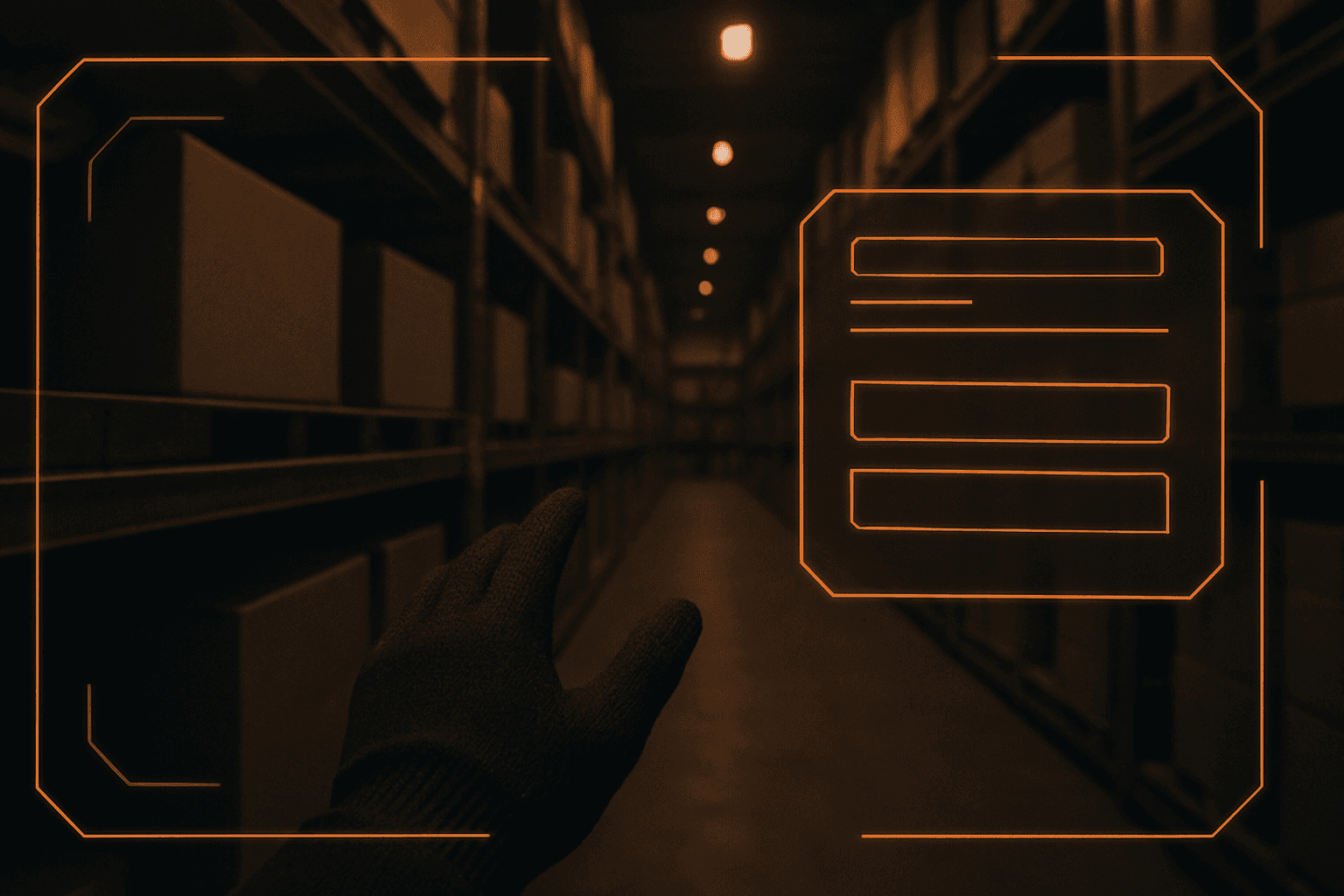
Egocentric Video
First-person POV: the foundational format for humanoid AI
Multimodal Sensors
RGB + depth + IMU synchronised to microsecond precision

Physical AI Annotation
Domain-specialist annotators, IAA >= 0.85, full audit trail
Stage 01
The five physical AI data types and what each enables
Egocentric video, real-world action demonstrations, multimodal sensor streams, human-robot interaction data and scene diversity datasets. Each is a distinct collection and annotation programme, not a variation on the same task. Click any tab to see what it is, why it matters and how Corpshore AI and Jwuma produce it.
The core format. First-person POV captures how the world looks to the agent that must navigate it.
Video recorded from a head-mounted or wearable camera, capturing the participant's first-person point of view: exactly what a humanoid or mobile robot camera would see.
Humanoids learn grasping, navigation and manipulation from first-person demonstrations. Policy models trained on third-person video fail to generalise to embodied agents. The first-person perspective captures the visual context of manipulation tasks as the robot will experience them.
What Corpshore AI collects
- --Indoor environments: kitchen, bathroom, office, retail, medical
- --Outdoor environments: street, agricultural, construction, logistics dock
- --Industrial: warehouse aisles, assembly stations, sorting lines, clean rooms
- --Multi-sensor sync: RGB, depth (LiDAR, structured light), IMU where requested
Annotation layer delivered
- +Frame-level action labels (pick, place, grasp, navigate, inspect, assemble)
- +Temporal phase segmentation (approach, contact, manipulation, release)
- +Object bounding boxes and instance masks per frame
- +Spatial relationship tags (above, inside, adjacent, gripping)
- +Quality flags: motion blur, occlusion, lighting drop
Stage 02
Annotate an egocentric video clip yourself
Walk through three collection environments: warehouse pick-and-place, kitchen meal preparation and manufacturing assembly. Step through 8 video frames per clip, apply action labels, object flags and confidence scores, then see your quality score measured against expert ground truth.
Select environment
Frame 1 / 8
Navigation
Synthetic simulation
Aisle ahead, shelf at distance, ambient light uniform
Annotate frame 1
0 of 8 frames annotated. Annotate 5 more to see your quality score.
Annotation record
Synthetic simulation
{
  "frame_id": "wh_001",
  "timestamp_ms": 480,
  "action_label": null,
  "object_present": null,
  "confidence": null,
  "annotator_tier": "domain_specialist",
  "environment": "warehouse",
  "quality_reviewed": false
}
Stage 03
Five dimensions that separate production-grade from commodity
Enterprise buyers of physical AI training data are acquiring a liability as much as an asset. Consent failures, demographic gaps, sensor miscalibration and annotation inconsistency all trace back to the data vendor. These five dimensions are how Corpshore AI programmes are scoped, delivered and audited.
Enterprise buyers of physical AI training data are acquiring a liability as much as an asset. Consent failures, demographic gaps and sensor miscalibration all trace back to the data vendor. These five quality dimensions are the basis on which Corpshore AI programmes are scoped, delivered and audited.
Consent and Rights Infrastructure
Physical AI data collection involves recording real people in real environments. Rights and consent are non-negotiable for enterprise buyers.
- +Explicit informed consent per participant per session
- +Clear rights grant for AI training use
- +Participant withdrawal and data deletion process
- +IRB-equivalent review for sensitive environments
- +Corpus-level rights clearance documentation delivered with dataset
Demographic and Environmental Diversity
A dataset's diversity is auditable. Corpshore AI delivers diversity metadata with every programme.
- +Participant demographic matrix: age, gender, body size distribution
- +Environment diversity log: lighting, floor surface, object density, cultural context
- +Geographic spread: collection locations per session logged
- +Distribution health checks flagging under-represented segments
Annotation Accuracy and Inter-Annotator Agreement
Action labels are only as good as the annotators who apply them.
- +Domain-specialist annotators for each task category
- +Double-annotation with IAA calculation per batch
- +Target IAA >= 0.85 (Cohen's Kappa) for action labels
- +Arbitration protocol for disagreements above threshold
- +Full IAA audit trail delivered with dataset
Sensor Calibration and Synchronisation
Multimodal datasets are only usable if sensor streams are calibrated and aligned.
- +Per-session calibration check for all sensors (RGB, depth, IMU)
- +Timestamp alignment validation: RGB-depth delta < 5ms
- +Calibration metadata delivered per session
- +Automated sync validation flag in dataset manifest
Format and Integration Readiness
Data must arrive in formats that plug into the buyer's training pipeline on day one.
- +Output formats: HDF5, TFRecord, Parquet, COCO JSON, custom schema on request
- +Metadata standard: ROSBAG-compatible where requested
- +Delivery: secure cloud storage with API access or encrypted physical delivery
- +Integration support: 2-week post-delivery engineering support in enterprise programmes
IAA targets by annotation tier
Basic
>= 0.75
Cohen's Kappa Primary action label
Standard
>= 0.82
Cohen's Kappa Primary and secondary labels
Premium
>= 0.88
Cohen's Kappa Full annotation schema
Stage 04
150+ environment types. 18+ countries. One programme.
Browse 12 environment categories and 150+ sub-environments. Toggle between active collection footprint, on-request coverage, annotation operations and Jwuma contributor pools. Hover any country pin to see environments, languages and collection notes.
Environment categories
Synthetic simulation
Stage 05
Design your physical AI data collection programme
Four steps: target system, data modalities, collection scale and coverage. The configurator derives a programme specification with estimated participants, timelines and indicative value range. All figures are synthetic simulations. A scoping conversation produces a formal estimate.
Step 1 of 4
What type of AI system will this data train?
Stage 06
How physical AI annotation actually works
For robotics ML engineers and data infrastructure leads. Four topics: temporal annotation at frame and segment level, object annotation in egocentric video, the IAA protocol for action labels, and format and delivery standards.
For the technically sophisticated buyer: robotics ML engineers and data infrastructure leads. These four topics cover the annotation layer that sits between raw sensor data and a usable training dataset.
The gap between a robot that works in a lab and a robot that works in a warehouse is almost never the model. It is the training data it never saw.
All video frames, annotation outputs, programme specifications, quality metrics and coverage figures shown in this demo are synthetic and simulated. No client data is shown. Illustration purposes only.
Where this goes next
Physical AI is blocked by data, not models. We solve the data problem.
Corpshore AI and Jwuma collect egocentric video, real-world action demonstrations and multimodal sensor data across 18+ countries and 150+ environments. Our contributor pools are pre-qualified for safety compliance, consent documentation and demographic diversity. The collection infrastructure exists. The annotation capability exists. What is missing is a programme scoping conversation.
Get in touch
Build the physical AI training dataset your programme needs.
Talk to Corpshore AI's physical data team. We scope, collect, annotate and deliver from anywhere your robots will operate.
Companion document
The Enterprise Guide to Physical AI Training Data
The walkthrough above stays open to everyone. The document is the written version, with the stages, the visuals and where each one maps to a service line.
Questions
What people ask about physical AI training data
What is egocentric video and why is it important for physical AI training?
Egocentric video is recorded from a first-person, head-mounted or wearable camera: capturing exactly what a humanoid or mobile robot camera would see. It is the foundational training data format for embodied AI because policy models trained on third-person video fail to generalise to agents operating in the physical world. The first-person perspective captures the visual context of manipulation tasks, navigation and interaction as the robot will experience them.
How does Corpshore AI collect physical AI training data at scale?
Corpshore AI collects physical AI training data through its Jwuma contributor platform, which coordinates participant recruitment, consent management, equipment deployment and session logistics across 18+ countries and 150+ environment types. Each programme is scoped to match the buyer's target deployment environment, demographic diversity requirements and sensor configuration. Data is collected by briefed participants performing scripted or semi-scripted task demonstrations, with all sessions recorded using calibrated sensor rigs.
What annotation does Corpshore AI provide for robotics and physical AI datasets?
Corpshore AI provides frame-level and segment-level annotation for physical AI datasets, including action labels, temporal phase segmentation, object bounding boxes and instance masks, spatial relationship tags, hand-object contact state labels and quality flags. All annotation is performed by domain-specialist annotators calibrated to the task taxonomy, with 100% double-annotation and inter-annotator agreement (IAA) calculation delivered as part of the dataset package.
What multimodal sensor data can Corpshore AI collect?
Corpshore AI supports synchronised multi-channel data collection including RGB video, depth (LiDAR and structured light), inertial measurement unit (IMU) data, stereo audio and tactile or force data where partner hardware is provided. All sensor streams are timestamped to a common epoch and delivered with per-session calibration metadata. The platform supports custom sensor configurations for programmes with specific hardware requirements.
How does Corpshore AI ensure the quality of physical AI training data?
Corpshore AI applies a five-layer quality framework: consent and rights infrastructure with full audit trails; demographic and environmental diversity monitoring; annotation accuracy through double-annotation and IAA protocols with a target Kappa of 0.85 or higher; sensor calibration and synchronisation validation; and format and integration readiness checks before delivery. Quality metrics are delivered as part of the dataset package.
What is the minimum scale for a physical AI data collection programme?
Corpshore AI supports physical AI data collection programmes starting from pilot scale of approximately 10 to 50 hours of egocentric or demonstration video. Pilot programmes validate the collection protocol, annotation schema and data quality before scaling to full production volumes. Enterprise programmes typically range from 500 to 10,000 hours depending on the target AI system and coverage requirements. All programmes begin with a scoping conversation to define the collection brief and quality framework.
Corpshore AI is the training data and evaluation division of Corpshore Solutions Corporation. This episode covers egocentric video collection, real-world action annotation, multimodal sensor datasets and enterprise programme design for physical AI and robotics. Data is collected across 18+ countries and 150+ environment types through the Jwuma contributor platform. All programme figures shown are synthetic simulations.